Amazon River is the largest river system on Earth by volume of water. Stretching across South America and flowing through the world's largest rainforest, it is one of nature's greatest wonders.
But it is also one of the most dangerous rivers on the planet.
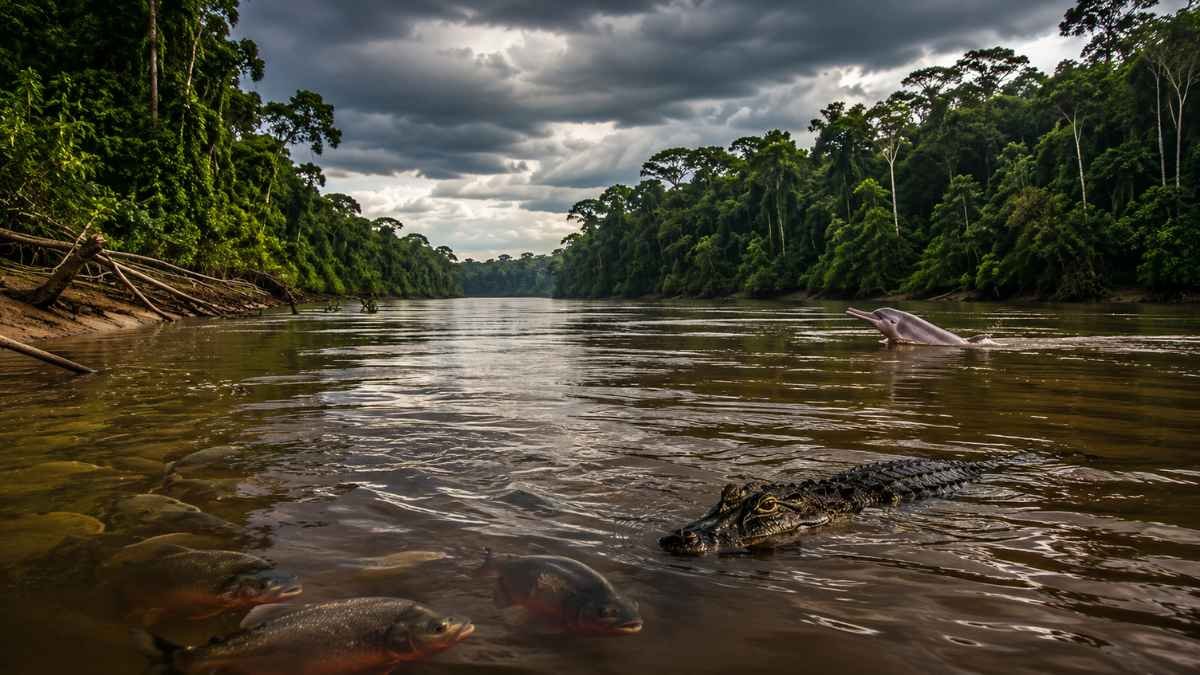
Beneath its muddy waters lives an astonishing variety of wildlife.
Powerful currents move enormous amounts of water.
Dense jungle surrounds much of its course.
For these reasons, very few people would willingly swim across the Amazon River.
Where Is the Amazon River?
The Amazon River flows through several South American countries, including:
- Brazil
- Peru
- Colombia
Its basin covers millions of square kilometers and supports the largest tropical rainforest on Earth.
The river eventually empties into the Atlantic Ocean.
From space, its size is so immense that it can be seen carving a massive path across the continent.
Why Is the Amazon River So Dangerous?
The danger comes from a combination of factors.
Powerful Currents
The Amazon carries more water than any other river on Earth.
Strong currents can quickly overwhelm swimmers.
Enormous Size
In some places, the river becomes so wide that the opposite bank is difficult to see.
Dense Wilderness
Remote sections of the river are far from medical facilities or rescue services.
Extreme Conditions
Flooding, storms, and changing water levels create additional hazards.
What Animals Live in the Amazon River?
The Amazon River is famous for its incredible biodiversity.
Some of its best-known inhabitants include:
- Piranhas
- Electric eels
- Anacondas
- River dolphins
- Caimans
Contrary to popular myths, most of these animals do not constantly attack humans.
However, their presence contributes to the river's intimidating reputation.
Are Piranhas Really Dangerous?
Piranhas are perhaps the most famous Amazon predators.
Movies often portray them as unstoppable killers.
In reality, attacks on humans are relatively uncommon.
Most species are cautious and avoid people.
Nevertheless, piranhas remain one of the symbols most associated with the Amazon River.
What Makes the Amazon Unique?
Several records make the Amazon extraordinary.
Largest River by Water Volume
No other river carries more water.
Massive Rainforest
The Amazon Rainforest contains an enormous percentage of the planet's biodiversity.
Incredible Wildlife
Thousands of species live within the river and surrounding forests.
Global Importance
The Amazon plays a major role in Earth's climate and ecosystems.
Can People Swim in the Amazon River?
Technically, yes.
People living near the river sometimes enter the water for fishing, transportation, or daily activities.
However, long-distance swimming is extremely challenging and potentially dangerous due to currents, wildlife, and environmental conditions.
Most visitors choose safer ways to experience the river.
Why Does the Amazon Matter?
The Amazon River supports millions of people and countless species.
It helps regulate regional weather patterns and contributes to global ecological balance.
Scientists continue studying the river to better understand biodiversity, climate systems, and conservation.
Its importance extends far beyond South America.
FAQs
Where is the Amazon River located?
The Amazon River flows through South America, primarily Brazil, Peru, and Colombia.
Why is the Amazon River dangerous?
Strong currents, wildlife, remote conditions, and enormous size contribute to its dangers.
Are piranhas common in the Amazon River?
Yes. Several species of piranhas live in the Amazon basin.
Is the Amazon River the longest river in the world?
There is ongoing debate, but it is unquestionably one of the world's longest rivers.
Why is the Amazon River important?
It supports vast ecosystems, millions of people, and plays a significant role in Earth's environment.