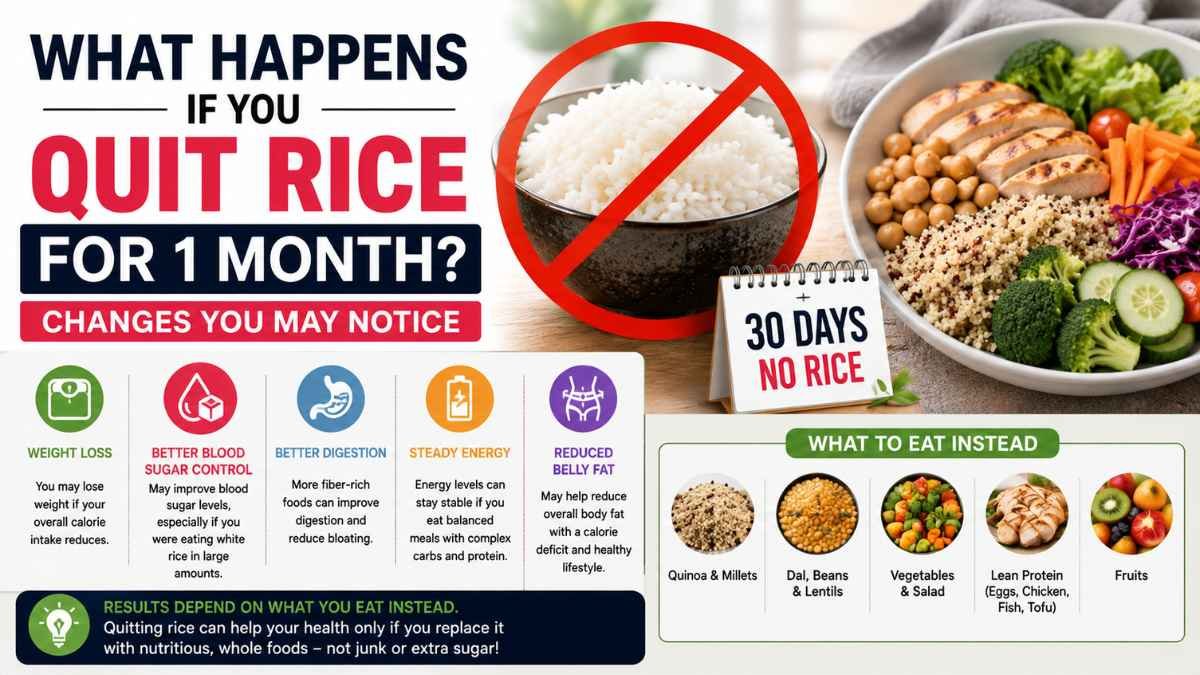
What happens if you quit rice for 1 month? This question has become increasingly popular among people trying to lose weight, reduce carbohydrates or improve blood sugar levels.
For many people, rice is a daily staple. It may appear at lunch, dinner or even more than once a day.
So what happens if you suddenly remove it from your diet for 30 days?
The answer is not as simple as “you will lose weight.”
Your body doesn't specifically need rice. It needs energy, carbohydrates, protein, fats, vitamins, minerals and fiber from an overall balanced diet.
If you stop eating rice but replace it with nutritious foods, your diet may improve in some ways. But if you replace rice with refined bread, fried foods or sugary snacks, simply quitting rice may not provide much benefit.
And there's another important distinction: white rice and brown rice are not nutritionally identical.
White rice is a refined grain, while brown rice retains the bran and germ and generally contains more fiber and micronutrients.
What happens during the first few days without rice?
The first thing you may notice is not necessarily weight loss.
It may simply be a change in how much carbohydrate you're eating.
If rice was your major carbohydrate source and you suddenly remove it, your overall carbohydrate and calorie intake may fall.
Some people may initially see a drop on the weighing scale.
But that doesn't necessarily mean they have lost the same amount of body fat.
Changes in carbohydrate intake can also affect the body's stored glycogen and associated water, so early changes on the scale can partly reflect fluid shifts.
That's why judging the success of a 30-day no-rice diet from the first few days can be misleading.
Can quitting rice for 1 month help you lose weight?
It can, but rice itself isn't the entire story.
Weight loss mainly depends on overall energy balance.
If removing rice causes you to consume fewer calories than your body uses, you may lose weight.
But if you replace those calories with large portions of bread, pasta, fried snacks, sweets or other calorie-dense foods, you may not lose weight at all.
So the more accurate statement is:
Quitting rice can help weight loss if it improves your overall diet and reduces excess calorie intake.
It is not a special fat-burning trick.
Does quitting rice reduce belly fat?
Not specifically.
There is no food that selectively makes the body burn belly fat simply because you stopped eating it.
If reducing rice helps create a sustainable calorie deficit, overall body fat may decrease over time.
But you cannot tell your body:
“Only burn belly fat because I stopped eating rice.”
Fat loss occurs according to your overall physiology and energy balance.
Why do some people lose weight after quitting rice?
There are several possible reasons.
Smaller portions
Rice can contribute a significant amount of carbohydrate and calories when eaten in large portions.
Removing it may automatically reduce the size of a meal.
Fewer total calories
If rice was being eaten in large quantities every day, eliminating it can reduce total calorie intake.
Better meal composition
Some people replace rice with vegetables, pulses, eggs, lean protein or other whole foods.
That can make the overall meal more nutrient-dense.
Less refined carbohydrate
If someone was eating large amounts of white rice, replacing some of it with whole grains or other high-fiber foods may improve carbohydrate quality.
Harvard's Nutrition Source notes that refined grains generally contain less fiber and can have a higher glycemic impact than whole grains.
What happens to blood sugar if you stop eating white rice?
This can be one of the more interesting changes.
White rice is a carbohydrate-rich refined grain and can raise blood glucose relatively quickly, although the response depends on the type and amount of rice and what else is eaten with it.
Harvard notes that rice has a wide range of glycemic index values depending on variety and processing, with brown rice generally having a lower GI than white rice.
Therefore, if someone replaces a large amount of white rice with higher-fiber foods, their post-meal blood sugar response may improve.
But this does not mean that everyone needs to completely eliminate rice.
Can quitting rice lower the risk of diabetes?
This needs some nuance.
Research has found associations between higher white-rice consumption and type 2 diabetes risk, particularly in some populations. Harvard summarizes studies in which higher white-rice intake was associated with increased diabetes risk, while higher whole-grain intake was associated with lower risk.
But this does not mean:
“Eating rice causes diabetes.”
Diet quality is much more complicated than one food.
Total diet, physical activity, body weight, genetics, sleep and many other factors influence diabetes risk.
And switching from rice to another refined carbohydrate isn't necessarily an improvement.
What if you replace rice with roti?
This is where many diet plans become misleading.
If you stop eating rice and simply eat several refined-flour rotis instead, you haven't necessarily transformed your diet.
The important question is:
What replaced the rice?
A balanced meal could contain:
- Vegetables
- Dal or beans
- Protein
- Whole grains
- Healthy fats
- Fruit
WHO recommends that carbohydrates come primarily from sources such as whole grains, vegetables, fruits and pulses rather than suggesting that carbohydrates should simply be eliminated.
What happens to digestion after quitting rice?
This depends heavily on what replaces it.
If rice is replaced with vegetables, legumes, fruits and whole grains, your fiber intake may increase.
Fiber can support digestive health and regular bowel movements.
But if you replace rice with low-fiber processed foods, your digestion may not improve.
Some people may even experience constipation if their overall fiber intake falls.
So quitting rice itself does not automatically improve digestion.
Can quitting rice make you feel less bloated?
Some people may report feeling less bloated after changing their diet.
But that doesn't mean rice itself was necessarily causing the problem.
Bloating can be influenced by:
- Portion size
- Sodium intake
- Legumes
- Certain vegetables
- Carbonated drinks
- Food intolerances
- Constipation
- Eating very quickly
If someone was eating very large rice-based meals, reducing the overall meal size may make them feel lighter.
That is different from rice being inherently responsible for bloating.
What happens to energy levels?
This depends on the replacement diet.
Carbohydrates are an important energy source. WHO states that for most people, a variety of unrefined carbohydrates should make up a significant part of total energy intake.
If you remove rice but continue getting carbohydrates from:
- Oats
- Whole grains
- Potatoes
- Fruits
- Vegetables
- Beans
- Lentils
you don't necessarily lose your body's carbohydrate supply.
But if you dramatically reduce carbohydrates overall, some people may temporarily experience:
- Tiredness
- Headache
- Irritability
- Difficulty concentrating
- Lower exercise performance
This is especially relevant for people who are physically active.
Does quitting rice for 30 days detox the body?
No.
This is one of the biggest myths surrounding rice-free diets.
Your body doesn't need to stop eating rice to “detox.”
The liver and kidneys already perform major roles in processing substances and maintaining the body's internal environment.
Removing rice does not create a special detoxification process.
A healthy diet is about adequate nutrition, balance, moderation and variety—not eliminating one staple food without a nutritional reason. WHO specifically identifies adequacy, balance, moderation and diversity as core principles of a healthy diet.
What happens to your fiber intake?
This depends entirely on what you eat instead.
White rice contains relatively little fiber compared with whole grains.
Brown rice, on the other hand, retains the bran and germ and provides more fiber and nutrients.
If quitting white rice leads you to eat more:
- Vegetables
- Fruits
- Beans
- Lentils
- Oats
- Whole grains
- Nuts and seeds
your overall fiber intake may increase.
But if rice is replaced with refined bread or processed snacks, fiber intake could remain low.
Can quitting rice reduce cravings?
Possibly—but not because rice is addictive.
If your previous meals contained large amounts of refined carbohydrates and you replace them with meals containing more protein, vegetables and fiber, you may feel fuller for longer.
Fiber can help regulate digestion and may help with hunger and blood-sugar control.
However, cravings are influenced by many factors, including eating patterns, sleep, stress, food availability and individual preferences.
There is no guarantee that eliminating rice will eliminate cravings.
What happens if you quit white rice but eat brown rice?
Then you're not really following a “no rice diet.”
You're changing the type of rice.
And nutritionally, that can be a very different decision.
Brown rice is a whole grain because the bran and germ remain intact.
White rice has been milled and polished, removing those layers and much of their naturally occurring fiber and micronutrients.
Harvard's Healthy Eating Plate lists brown rice among whole-grain options and notes that whole grains generally have a milder effect on blood sugar and insulin than refined grains such as white rice.
Is brown rice healthier than white rice?
Generally, brown rice offers more fiber and retains more of the grain's original nutrients.
That doesn't mean white rice is “bad.”
White rice can still fit into a healthy diet.
The bigger issue is often portion size, overall dietary pattern and what the rice is eaten with.
For someone who prefers white rice, simply eating a reasonable portion alongside vegetables, pulses and protein may be more practical than eliminating rice completely.
What happens if you stop rice and eat more protein?
This can change how full you feel.
If rice is replaced with foods such as eggs, fish, chicken, dairy, tofu, beans or lentils, protein intake may increase depending on the meal.
Protein is important for maintaining muscle and supporting many body functions.
However, a healthy diet should not simply swap one food for excessive amounts of another.
You still need carbohydrates, fats, fiber, vitamins and minerals.
Can quitting rice make you lose muscle?
Not automatically.
Muscle loss is more closely related to factors such as inadequate protein intake, excessive calorie restriction, lack of resistance exercise and other health factors.
If someone quits rice and follows a balanced diet with sufficient protein and calories, eliminating rice itself doesn't mean they will lose muscle.
But an extreme diet that dramatically cuts calories can make maintaining muscle more difficult.
What happens if you exercise while avoiding rice?
You can still exercise without eating rice.
Athletes and active people obtain carbohydrates from many foods.
Oats, potatoes, fruits, whole grains, legumes and other carbohydrate sources can provide energy.
However, if you dramatically reduce total carbohydrate intake, high-intensity exercise may feel more difficult for some people.
This is because carbohydrate is an important fuel source for intense physical activity.
Can you live without rice?
Absolutely.
Rice is a staple food, not an essential food that the human body specifically requires.
You can obtain carbohydrates and nutrients from many other foods.
WHO recommends a diverse diet that includes foods such as whole grains, vegetables, fruits and pulses. Rice itself can also be part of that healthy pattern.
So there is nothing biologically special about eating rice every day.
But there is also no universal health requirement to eliminate it.
What should you eat instead of rice?
If you're reducing or avoiding rice, good alternatives can include:
- Oats
- Quinoa
- Barley
- Millets
- Whole-wheat grains
- Potatoes
- Sweet potatoes
- Beans
- Lentils
- Other whole grains
The best choice depends on your nutritional needs and the rest of your diet.
WHO specifically recommends getting carbohydrates primarily from whole grains, vegetables, fruits and pulses.
Is quitting rice better than reducing rice?
For many people, portion control may be more sustainable than complete elimination.
Instead of saying:
“I will never eat rice again.”
you might simply reduce the portion and add:
- More vegetables
- Dal
- Beans
- Eggs
- Fish
- Chicken
- Tofu
- Curd or other suitable protein sources
This can create a more balanced plate without treating rice as a forbidden food.
Harvard's Healthy Eating Plate recommends making roughly half the plate vegetables and fruits, one quarter whole grains and one quarter healthy protein sources.
Who should be careful with a strict no-rice diet?
People with certain medical conditions or specific nutritional needs should avoid making major dietary changes without appropriate advice.
This is particularly important for:
- Children
- Pregnant women
- Older adults
- People with diabetes using glucose-lowering medicines
- People who are underweight
- People with eating disorders
- Athletes with high energy requirements
- People with certain kidney or gastrointestinal conditions
A diet that works for one person may not be appropriate for another.
What about people with diabetes?
Someone with diabetes doesn't necessarily need to completely stop eating rice.
The more important issues include:
- Portion size
- Type of rice
- Total carbohydrate intake
- Fiber
- Protein
- Overall meal composition
- Blood glucose response
Whole grains and higher-fiber carbohydrate sources can have a more favorable effect on blood glucose than refined grains.
Anyone taking diabetes medication should also be careful about making major dietary changes because a substantial reduction in carbohydrate intake can affect blood glucose levels and medication needs.
Does quitting rice lower cholesterol?
Not necessarily.
Rice itself is not the main determinant of blood cholesterol.
If quitting rice leads to a healthier diet containing more fiber-rich whole foods, cholesterol levels may improve as part of the overall dietary change.
But if rice is replaced with foods high in saturated fat, refined carbohydrates or ultra-processed foods, the result could be very different.
Again, the replacement matters more than the simple act of removing rice.
Does quitting rice improve skin?
There isn't strong evidence that simply stopping rice for 30 days will automatically produce clearer or healthier skin.
Skin health is influenced by:
- Overall nutrition
- Hydration
- Sleep
- Hormones
- Sun exposure
- Genetics
- Skin-care habits
- Medical conditions
If removing rice improves the overall quality of someone's diet, they may notice changes, but that shouldn't be attributed to rice elimination alone.
Does quitting rice reduce inflammation?
There is no good reason to claim that rice itself is inherently inflammatory for everyone.
Dietary patterns matter more.
Whole grains, vegetables, fruits, legumes and nuts are generally emphasized in healthy dietary patterns, while highly processed foods high in unhealthy fats, free sugars and sodium should be limited. WHO highlights this broader dietary approach rather than eliminating a single staple food.
What happens after 30 days?
After a month, the outcome could be very different from person to person.
You may lose weight
If eliminating rice reduced your overall calorie intake.
Your blood sugar may improve
Particularly if you replaced large portions of refined white rice with higher-fiber foods.
You may eat more fiber
If your replacement foods include vegetables, fruits, legumes and whole grains.
You may feel no major difference
If your overall calorie intake and diet quality remain similar.
You may feel worse
If you replace rice with highly processed foods or don't consume enough total energy and nutrients.
That's why there is no universal “30-day no-rice result.”
The biggest mistake: replacing rice with junk food
Imagine someone stops eating rice but starts eating:
- Burgers
- Fries
- Biscuits
- Sugary cereals
- Chips
- Desserts
- Refined bread
They may technically be following a no-rice diet, but that doesn't make the diet healthier.
Rice isn't automatically replaced by “healthy food.”
The nutritional quality of the replacement determines much of the outcome.
So, should you quit rice for one month?
There's no universal reason that everyone should.
If you eat large amounts of white rice and want to experiment with your diet, reducing the portion or replacing some servings with whole grains, legumes and vegetables may be a reasonable approach.
But you don't have to completely eliminate rice to eat healthily.
WHO's current healthy-diet guidance emphasizes variety, balance, moderation and adequate nutrition, with carbohydrates coming primarily from minimally processed sources such as whole grains, vegetables, fruits and pulses.
The Bottom Line
What happens if you quit rice for 1 month?
You may lose some weight if removing rice lowers your overall calorie intake. Your blood sugar response may also improve if you replace large portions of refined white rice with higher-fiber foods.
But quitting rice itself isn't a magic weight-loss or detox method.
The biggest factor is what you eat instead.
White rice is a refined grain with less fiber than brown rice, while brown rice retains the bran and germ and provides more fiber and nutrients.
For many people, there may be no need to completely remove rice. A more sustainable approach can be to control portions, choose whole-grain options more often, and build meals around vegetables, pulses and quality protein.
So before starting a 30-day no-rice diet, don't just ask:
“What happens if I stop eating rice?”
Ask the more important question:
“What am I going to eat instead?”
That answer will often determine whether the change actually makes your diet healthier.