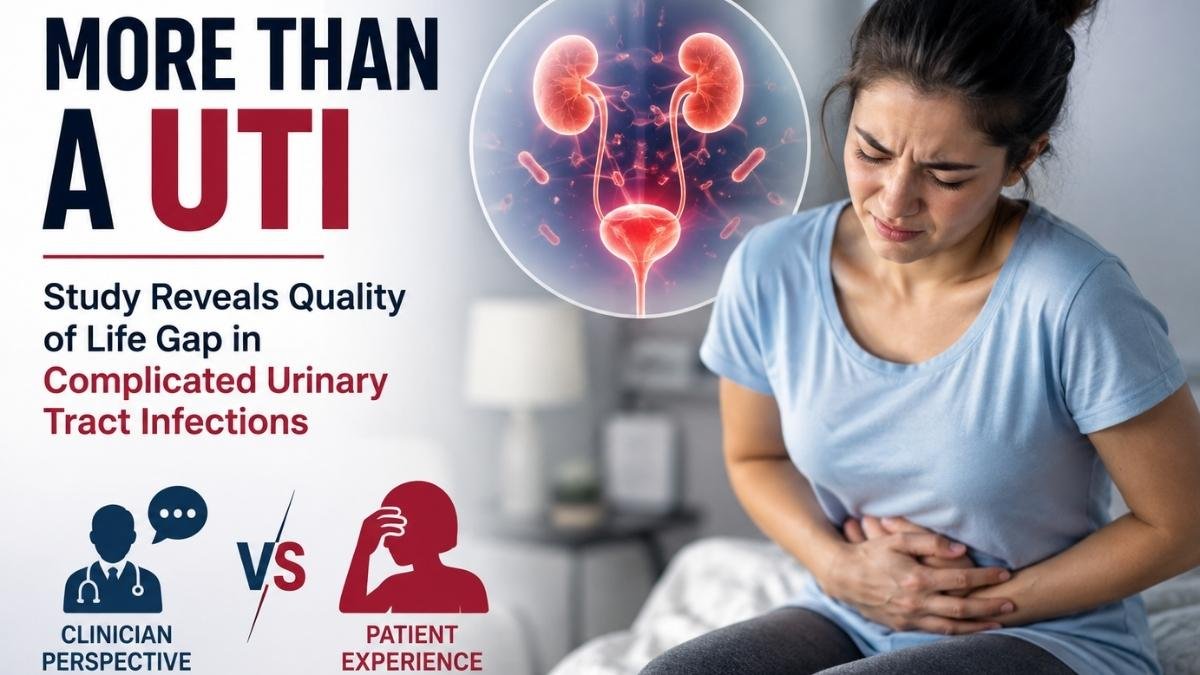
Complicated urinary tract infections (UTIs) may affect a person's life far beyond the physical symptoms of the infection. A new qualitative study has found that patients and clinicians can view the impact of complicated UTIs very differently, particularly when it comes to everyday functioning and quality of life.
The researchers found that the effects of complicated UTIs on health-related quality of life were broader than clinicians consistently recognised. While healthcare professionals generally understood that quality of life was important, patients described physical, emotional and functional consequences that were not always fully captured during clinical assessments.
Patients and Doctors Saw the Infection Differently
The study involved 12 hospitalised patients with complicated UTIs and 16 clinicians who had cared for those patients for at least two days.
The research was conducted at two academic hospitals, with interviews taking place between February and May 2023. The patients had a median age of 70, while the clinicians had a median age of 35.
Researchers used semi-structured interviews to explore how patients and clinicians understood the effects of complicated urinary tract infections.
The analysis identified four key themes highlighting differences between the two groups.
The Daily Impact May Be Underestimated
One of the main findings was that clinicians did not always recognise the full extent to which UTI symptoms affected patients' daily functioning.
Patients described a wider range of consequences, including physical, emotional and functional effects.
Clinicians, meanwhile, tended to focus more heavily on medical considerations and the expected clinical course of the infection. They also considered whether particular symptoms could be directly attributed to the urinary tract infection.
This difference can matter because a patient's experience of an infection may extend beyond the symptoms that are most obvious from a clinical perspective.
Patients and Clinicians Used Different Language
The researchers also found differences in the way patients and clinicians talked about health-related quality of life.
Patients and healthcare professionals often used different language and levels of detail when describing the impact of the infection.
As a result, some important aspects of what patients were experiencing may not always be identified during routine clinical assessments.
Clinicians generally agreed that quality of life should be considered, but their confidence and experience in addressing these issues varied considerably.
Why Quality of Life Matters in UTI Research
The researchers believe the findings could help improve the way complicated urinary tract infections are studied and treated.
They suggested developing disease-specific patient-reported health-related quality-of-life tools for future antibacterial clinical trials.
Such tools could help researchers measure outcomes from the patient's perspective rather than relying only on clinical assessments.
The researchers also said that a better understanding of the differences between patient and clinician perspectives could improve patient-doctor communication and support more patient-centred care.
What the Study Means for People With Complicated UTIs
The study does not suggest that clinicians are ignoring patients' concerns. Instead, it highlights a gap between how patients experience complicated UTIs and how those experiences may be interpreted in clinical settings.
A patient's quality of life can include much more than the medical progression of an infection. The study suggests that physical symptoms, emotional effects and difficulties with everyday activities should also be considered when evaluating the overall impact of complicated UTIs.
The researchers concluded that recognising these differences could help future clinical trials and improve communication between patients and healthcare professionals.
The study was published in JAMA Network Open by Howard-Anderson J and colleagues under the title Comparing patient and clinician perceptions of health-related quality of life in urinary tract infections.