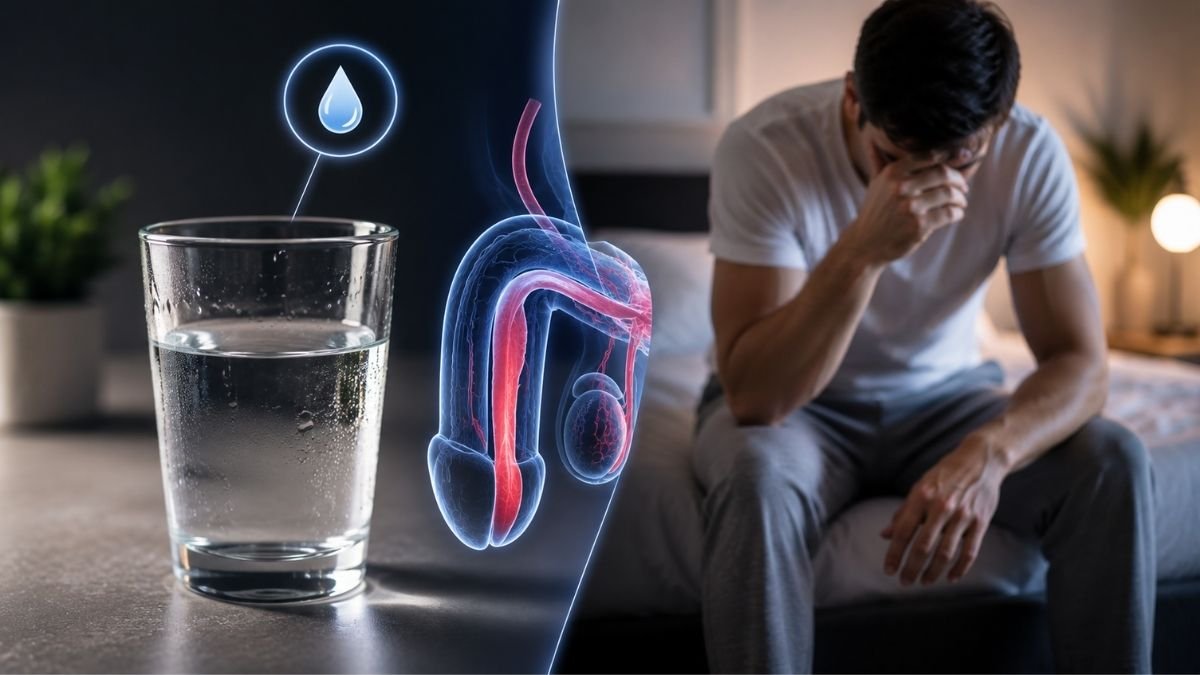
You already know that dehydration can leave you thirsty, tired and dizzy. But can dehydration affect erections too? The answer is: it may.
For men, an erection depends on a complex interaction between the brain, nerves, hormones, blood vessels and blood flow. When the body does not have enough fluid, some of these systems can be affected. This may temporarily make it harder to get or maintain an erection.
However, dehydration is not the only possible cause of erection problems. Persistent erectile dysfunction (ED) can have several underlying causes and should not automatically be blamed on not drinking enough water.
How Does Dehydration Affect Erections?
An erection is essentially a blood-flow event controlled by the nervous system.
When a man becomes sexually aroused, signals travel from the brain through the nerves to the penis. Blood vessels in the erectile tissue then relax, allowing more blood to enter the penis.
The penis contains two sponge-like structures called the corpora cavernosa. As these structures fill with blood, they expand and become firm. At the same time, veins carrying blood away from the penis are compressed, helping maintain the erection.
This means that anything affecting circulation, nerve signals, sexual arousal or overall physical condition can potentially affect erection quality.
And dehydration can influence some of these factors.
Can Not Drinking Enough Water Reduce Blood Flow?
Blood contains a liquid component called plasma, which carries blood cells, nutrients and hormones throughout the body.
When you lose more fluid than you replace, your blood volume can decrease. This can affect circulation and the amount of blood available to different tissues.
Because getting an erection requires increased blood flow to the penis, significant dehydration may make it harder for some men to achieve or maintain their usual erection firmness.
That does not mean drinking an extra glass of water will immediately make an erection stronger. The effect of dehydration is more complicated than that.
What Happens to Your Body During Dehydration?
When you become dehydrated, your body starts working to conserve the fluid it still has.
One hormone involved in this process is vasopressin, also known as antidiuretic hormone (ADH). It helps the kidneys retain water and plays a role in maintaining the body's fluid balance.
During dehydration, the body's priority is maintaining essential physiological functions rather than sexual performance.
This is one reason why dehydration and erectile function can be connected, particularly when fluid loss is significant.
Can Dehydration Make You Too Tired for Sex?
Dehydration can cause symptoms such as:
- Thirst
- Dry mouth
- Headache
- Dizziness
- Fatigue
- Weakness
- Difficulty concentrating
- Darker urine
When you're physically exhausted, sexual desire and performance can naturally take a back seat.
Sex requires both physical and mental energy. If your body is dealing with heat, fatigue or fluid loss, you may simply feel less interested in intimacy.
What Does Your Brain Have to Do With an Erection?
An erection doesn't begin in the penis. It begins with communication between the brain and the body.
Sexual thoughts, attraction and physical stimulation activate brain pathways that send signals through the nervous system to the penis.
Dehydration can leave you feeling tired, uncomfortable or mentally foggy. If you're distracted by thirst, a headache or exhaustion, your sexual arousal may also be affected.
So, can dehydration cause erectile problems? In some situations, it may contribute to temporary changes in sexual response, rather than being a direct cause of ongoing erectile dysfunction.
Why Hot Weather May Make It Worse
Hot weather can make dehydration more noticeable.
Sweating is one of the body's main ways of regulating temperature. During prolonged heat exposure or exercise, you can lose significant amounts of fluid through sweat.
If those fluids aren't adequately replaced, dehydration can develop.
The combination of heat, dehydration and fatigue can reduce energy and affect overall physical performance, including sexual responsiveness.
Does Alcohol Affect Erections When You're Dehydrated?
Alcohol can also contribute to dehydration because it can increase fluid loss through urination.
That means combining alcohol, heat, dehydration and fatigue may be particularly unhelpful for erection quality.
If erection problems occur after drinking alcohol, being dehydrated may be one factor, but it should not automatically be assumed to be the only explanation.
Don't Confuse Temporary Dehydration With Erectile Dysfunction
Having a weaker erection after a hot day, intense workout or period of dehydration does not automatically mean you have erectile dysfunction.
Erectile dysfunction generally refers to ongoing difficulty getting or maintaining an erection firm enough for sexual activity.
Occasional erection problems are common. However, repeated erectile difficulties can sometimes be associated with underlying health problems, including blood-vessel disease.
That is why repeatedly blaming erectile dysfunction on dehydration could potentially delay attention to another underlying problem.
How Can You Tell If You're Dehydrated?
Your body can provide several clues that you may not be getting enough fluid.
Dark Yellow Urine
Urine colour can provide a rough indication of hydration, although foods, supplements and medications can also affect its colour.
Persistent Thirst
Feeling thirsty can be an early signal that your body needs more fluid.
Dry Mouth
Reduced saliva production can occur when you're dehydrated.
Fatigue or Dizziness
Fluid loss can affect how you feel physically, particularly when dehydration becomes more significant.
Headache
Dehydration can sometimes contribute to headaches.
The risk of significant dehydration can be higher when large amounts of fluid are lost through vomiting, diarrhoea, heavy sweating or illness.
When Should You Look Beyond Dehydration?
Your penis needs adequate blood flow to become and remain erect, while your body needs sufficient fluid to maintain normal circulation and physiological function.
Therefore, severe dehydration may contribute to temporary erection problems.
But if erection difficulties keep happening even when you're properly hydrated, dehydration may not be the explanation.
Persistent erection problems can be associated with factors such as cardiovascular risk, diabetes, hormonal problems, medication side effects or psychological stress.
So, if an erection is weaker than usual after a long, hot and exhausting day, there's no need to immediately assume something is seriously wrong.
Your body may simply need fluids, rest and recovery.
But if the problem keeps coming back, don't assume it's just dehydration. Repeated erection problems can sometimes be a sign of an underlying health issue and deserve proper medical attention