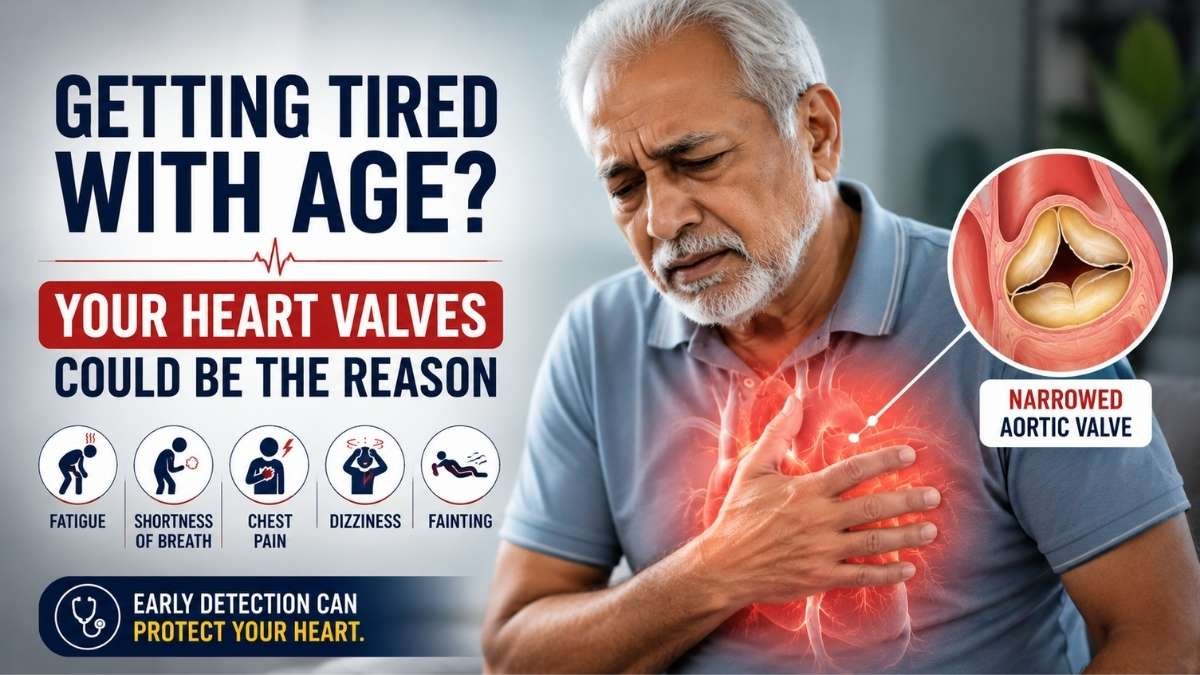
Getting Tired With Age? Your Heart Valves Could Be the Reason
Getting tired more easily as you grow older is often dismissed as a normal part of ageing. But a gradual drop in stamina, increasing breathlessness or avoiding activities you once enjoyed can sometimes point to an underlying heart valve problem.
One condition doctors particularly watch for is aortic stenosis, in which the aortic valve becomes narrowed and restricts blood flow from the heart to the rest of the body.
The Signs Can Be Easy to Miss
Heart valve disease often develops slowly. Symptoms can include fatigue, shortness of breath, chest pain, dizziness and fainting.
Some older adults may simply start walking shorter distances, using fewer stairs or taking more breaks. These changes can easily be attributed to age, even when an underlying heart condition may be responsible.
A doctor may detect a heart murmur during a routine examination. If valve disease is suspected, an echocardiogram can assess how the valves open and close and how effectively the heart is working.
Why Early Detection Matters
Finding valve disease earlier gives patients time to understand the condition and discuss treatment before symptoms become severe.
For some people with severe aortic stenosis, transcatheter aortic valve replacement (TAVR) may be an option. The procedure delivers a replacement valve through a catheter rather than conventional open-heart surgery. Treatment decisions depend on factors including symptoms, valve anatomy, age, overall health and quality-of-life goals.
Regular check-ups and paying attention to new breathlessness, reduced stamina or declining energy can therefore be important parts of healthy ageing.