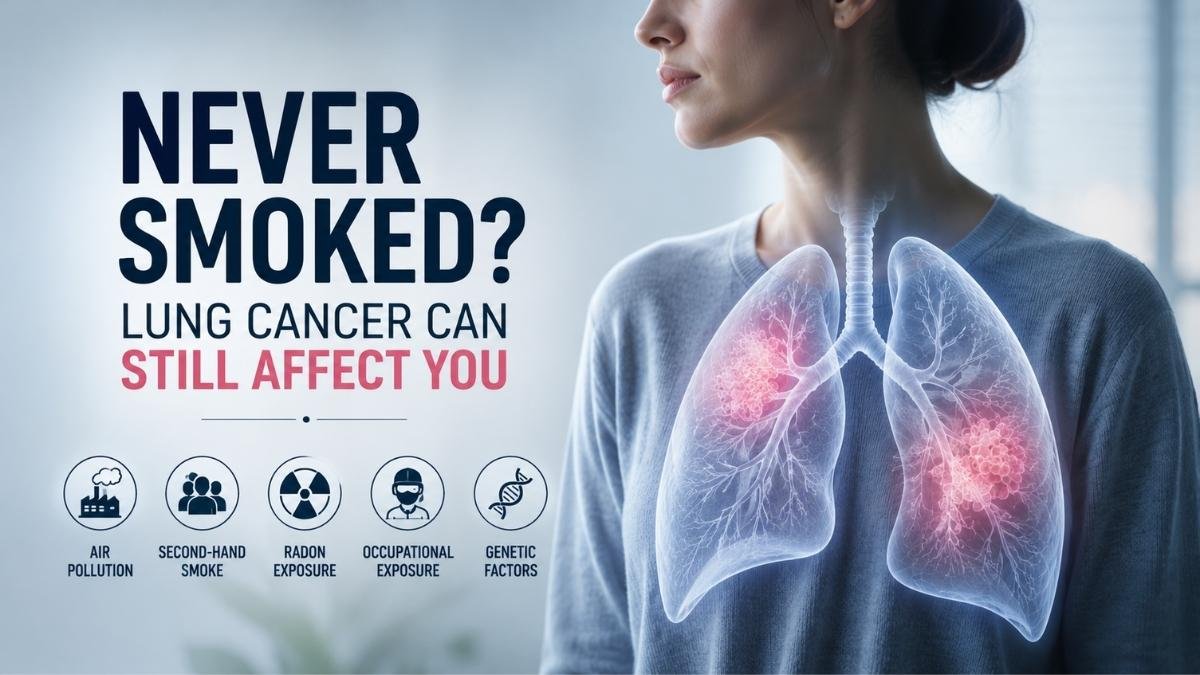
Lung cancer is often associated with smoking, but a leading oncologist says a significant share of cases in India occur in people who have never smoked. Dr Manish Singhal, director at Yashoda Hospital, Ghaziabad, says up to 50% of lung cancer cases in India may occur among non-smokers.
According to Dr Singhal, lung cancer is the most common cancer among Indian men. He cited National Cancer Registry Programme projections of around 111,000 new cases in India in 2025.
One of the biggest challenges, he said, is that the disease can develop silently. Nearly half of patients in India are diagnosed only after the cancer has spread beyond the lungs, which can limit treatment options.
Why Are Non-Smokers Also Developing Lung Cancer?
Smoking remains the biggest risk factor, with nearly 100 million adult smokers in India, according to Dr Singhal.
However, he said up to half of lung cancer cases occur in people who have never smoked. He linked this pattern to factors including air pollution, second-hand smoke, radon, occupational exposure and genetics.
The trend is particularly noticeable among women and younger people. The average age at diagnosis in India is in the mid-50s, which Dr Singhal said is around a decade earlier than in Western countries.
These Symptoms Should Not Be Ignored
Dr Singhal stressed that people should remain aware of possible warning signs regardless of their smoking history.
These include:
- Persistent cough
- Unexplained weight loss
- Chest pain
- Coughing up blood
For people considered at higher risk, he said low-dose CT screening can help detect the disease earlier, when treatment is most effective.
What Happens After a Lung Cancer Diagnosis?
A lung cancer diagnosis is followed by a structured clinical process rather than immediate treatment.
Doctors first determine whether the cancer is non-small cell or small cell lung cancer, establish its stage and assess the patient's overall health.
Dr Singhal highlighted the growing importance of understanding the biology of individual tumours. Biomarker testing can identify specific genetic alterations that may influence treatment choices.
Precision Medicine Is Changing Treatment
According to Dr Singhal, mutations involving genes such as EGFR, ALK and ROS1 are common in non-smokers and younger patients.
When these alterations are identified, targeted drugs may be used instead of relying only on chemotherapy. This approach is known as precision medicine, where treatment is guided by the biology of an individual tumour.
Depending on the cancer and the patient, treatment can involve surgery, radiotherapy, targeted therapy, immunotherapy and supportive care.
Treatment Is Not the Only Part of Recovery
Dr Singhal also stressed that care extends beyond medical treatment.
Factors such as nutrition, exercise, symptom monitoring and counselling can play a role in survival and quality of life.
He also pointed to newer technologies, including liquid biopsies, advanced molecular diagnostics and AI, which are helping doctors track tumours more precisely.
Globally, lung cancer remains the leading cause of cancer death. Dr Singhal cited figures of around 2.5 million new cases and 1.8 million deaths in 2022.
He advised patients to understand their cancer type and stage, ask about biomarker testing and stay closely connected with their medical team when making treatment decisions.
Medical note: This article is for general information and is not a substitute for professional medical advice. Anyone with concerning symptoms should consult a qualified doctor.