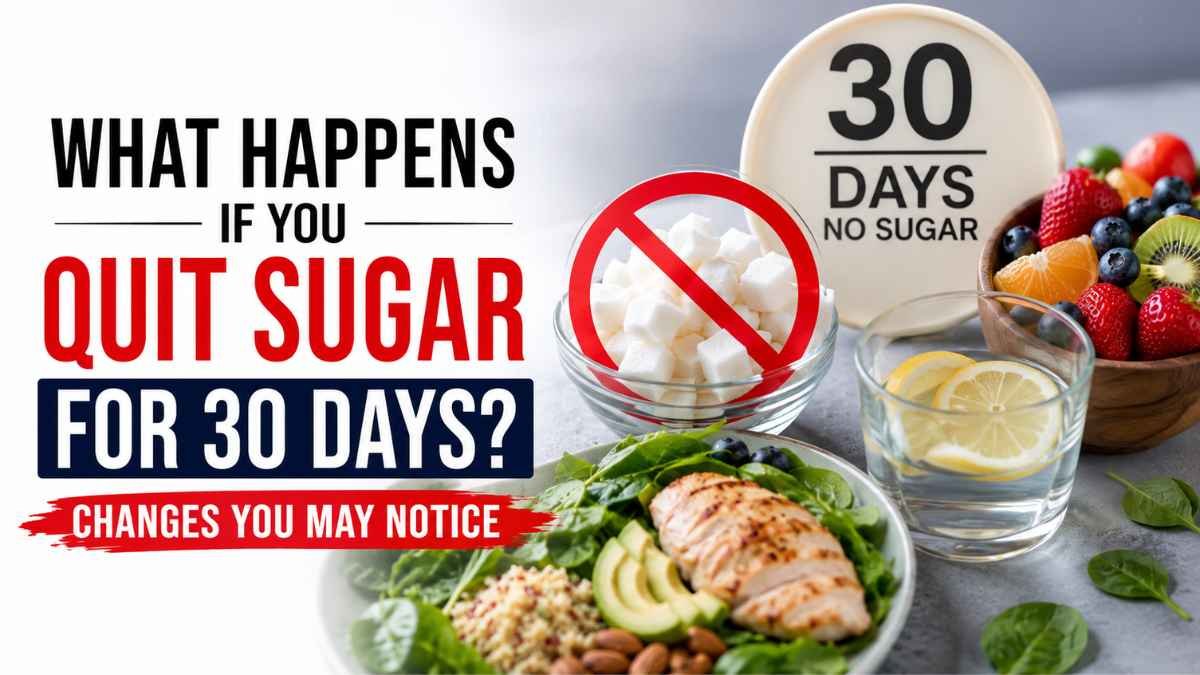
What happens if you quit sugar for 30 days? This is a popular question among people trying to lose weight, reduce cravings, improve blood sugar or simply eat a healthier diet.
But before starting a 30-day no-sugar challenge, there is one important distinction to understand.
You don't need to eliminate all sugar-containing foods from your diet.
The goal should generally be to reduce added and free sugars, not to stop eating fruit, vegetables or other naturally occurring sources of sugar.
The World Health Organization recommends keeping free sugars below 10% of total daily energy intake, with a further reduction to below 5% offering additional health benefits.
So what could actually happen if you significantly reduce added sugar for a month?
The changes can involve weight, appetite, blood sugar, teeth and overall diet quality—but the results depend heavily on what you eat instead.
First, what does “quit sugar” actually mean?
When people say “I quit sugar,” they often mean they stopped eating:
- Candy
- Cakes
- Cookies
- Sweetened cereals
- Sugary drinks
- Desserts
- Sweetened coffee and tea
- Sweetened packaged foods
These foods often contain added sugars.
Added sugars are different from sugars naturally present in foods such as whole fruit and milk.
The CDC defines added sugars as sugars added during processing or preparation, while naturally occurring sugars in fruits, vegetables and milk aren't classified as added sugars.
That distinction matters.
Quitting added sugar is very different from trying to eliminate every gram of sugar from your diet.
What happens during the first few days?
The first few days may be the hardest for someone who regularly consumes lots of sugary foods and drinks.
If you're used to sweetened tea, soda, desserts or chocolate every day, suddenly removing them can make you notice how often you were reaching for something sweet.
You may experience:
- Stronger cravings for sweet foods
- Irritability
- Difficulty adjusting to less-sweet flavors
- More frequent thoughts about desserts
- Changes in your usual eating routine
These experiences can vary greatly between people.
It is better to think of the first few days as an adjustment period, rather than calling it a medical “sugar withdrawal.”
Can quitting sugar reduce cravings?
It may help.
One reason is simple: if you repeatedly eat very sweet foods, you're repeatedly exposing your taste preferences to intense sweetness.
When those foods are removed, foods that previously tasted bland may gradually seem sweeter or more satisfying.
For example, someone who normally adds two teaspoons of sugar to tea may eventually find unsweetened tea easier to drink.
But this isn't guaranteed to happen within a fixed number of days.
Cravings are influenced by habits, sleep, stress, food availability and individual eating patterns.
What happens to your weight?
This is one of the biggest reasons people try a no sugar diet for 1 month.
Reducing added sugar can help with weight management if it lowers your overall calorie intake.
Added sugars can contribute calories without providing many essential nutrients, and high intake is associated with unhealthy weight gain and obesity.
This is particularly relevant when sugar comes from drinks.
A sugary drink can add a substantial amount of calories without making you feel as full as a meal containing protein, fiber and whole foods.
So replacing sugary drinks with water or unsweetened beverages can make a meaningful difference for some people.
Does quitting sugar reduce belly fat?
It can contribute to overall fat loss, but there is no special mechanism that targets belly fat simply because you stopped eating sugar.
If reducing added sugar creates a calorie deficit, your body may gradually lose stored fat.
Where that fat comes off first depends on individual biology.
So claims that:
“Quit sugar for 30 days and your belly fat will disappear”
are far too simplistic.
A better statement is:
Reducing excess added sugar can support weight management when it improves overall calorie intake and diet quality.
What happens to blood sugar?
Reducing foods and drinks high in added sugar can reduce large amounts of rapidly absorbed carbohydrate in the diet.
This may make it easier to manage blood glucose, particularly when sugary drinks and refined foods are replaced with higher-fiber whole foods.
The American Heart Association notes that added sugar in foods such as sugary drinks can be absorbed rapidly, while fiber-containing foods such as whole fruit are digested differently.
But quitting sugar does not mean diabetes is automatically reversed.
Blood glucose is influenced by many factors, including total carbohydrate intake, body weight, physical activity, medications, genetics and insulin sensitivity.
Can quitting sugar prevent diabetes?
Reducing excessive added sugar is one component of a healthier diet, but it would be inaccurate to say that simply stopping sugar prevents diabetes in every person.
The CDC states that consuming too much added sugar can contribute to health problems including weight gain, obesity, type 2 diabetes and heart disease.
Sugar intake is therefore one part of a much bigger picture.
Maintaining a healthy weight, being physically active and following an overall balanced diet are also important.
What happens to your teeth?
This is one area where the evidence is particularly strong.
Free sugars contribute to dental caries, or tooth decay.
WHO recommends limiting free sugar intake partly because lower intake reduces the risk of tooth decay.
So if someone cuts down on:
- Candy
- Cakes
- Cookies
- Sugary drinks
- Sweetened snacks
their teeth may benefit, particularly if overall sugar exposure becomes substantially lower.
However, brushing and flossing remain important.
What happens if you stop drinking sugary beverages?
This may be one of the most useful changes in a 30-day sugar-free challenge.
Sugary drinks include:
- Regular soda
- Sweetened tea
- Sweetened coffee
- Energy drinks
- Sports drinks
- Fruit drinks
- Sweetened waters
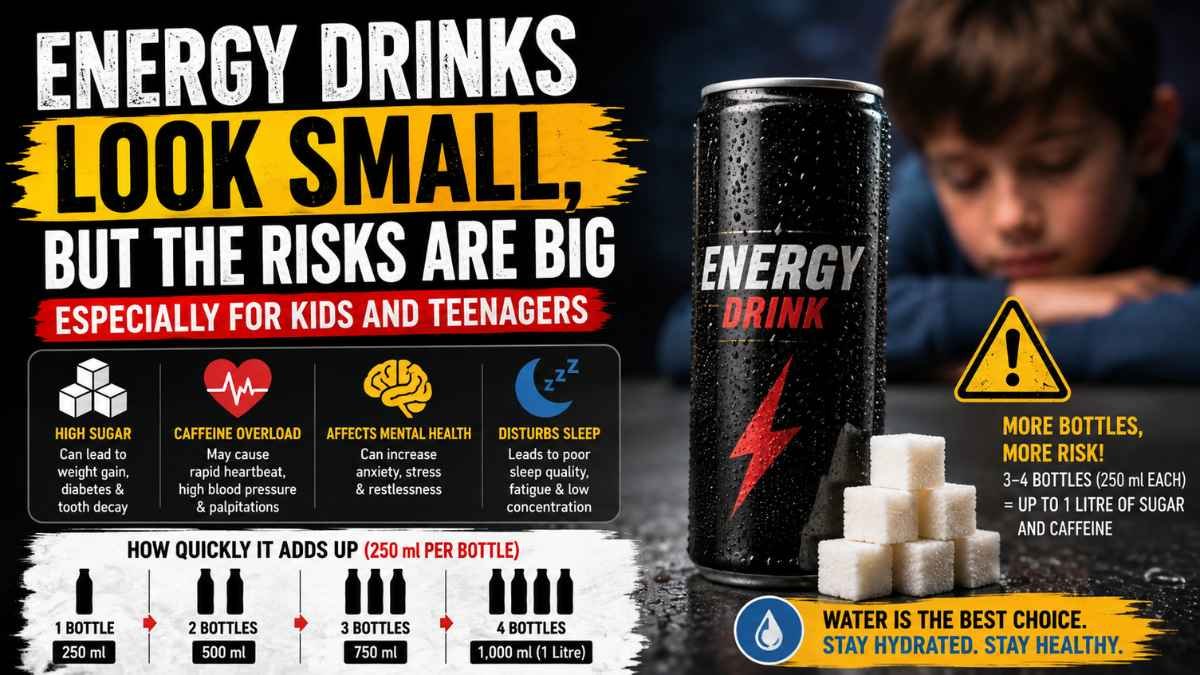
The CDC identifies sugary drinks as a major source of added sugar and notes that frequent consumption is associated with weight gain, obesity, type 2 diabetes, heart disease, tooth decay and gout.
Replacing them with water or unsweetened beverages can reduce added sugar without requiring you to eliminate entire food groups.
What happens to energy levels?
Some people report feeling more stable after reducing sugary foods and drinks.
However, this doesn't mean sugar itself is the only thing controlling energy.
A person's overall diet matters.
If you replace sugary snacks with balanced meals containing:
- Protein
- Whole grains
- Vegetables
- Fruit
- Legumes
- Healthy fats
your meals may provide more sustained nutrition.
On the other hand, if you remove sugar but don't eat enough total food, you may feel tired.
Can quitting sugar make you feel less hungry?
It may help indirectly.
Foods high in added sugar can contribute calories without necessarily providing much fiber or protein.
Replacing them with foods containing protein and fiber can make meals more filling.
For example:
Candy → fruit + unsweetened yogurt
or
Sugary cereal → oats + nuts + fruit
is a very different nutritional change from simply replacing sugar with another processed snack.
What happens to your diet quality?
This may actually be one of the biggest benefits.
When people reduce added sugar, they may start reading food labels more carefully.
They may discover added sugar in foods they didn't expect, including:
- Sauces
- Breakfast cereals
- Granola bars
- Flavored yogurt
- Sweetened coffee
- Packaged snacks
- Bread products
- Condiments
The American Heart Association notes that added sugars can appear under multiple names, including sucrose, maltose, syrups, honey and other sweeteners.
Reading labels can therefore make people more aware of how much added sugar they were consuming.
Does quitting sugar improve your skin?
This claim needs caution.
You may see people online saying that quitting sugar will automatically clear acne, make skin glow or reverse aging.
There isn't enough evidence to promise those results for everyone.
If reducing added sugar also improves someone's overall diet, weight, sleep and nutrient intake, they may notice changes in how they feel or look.
But “30 days without sugar = perfect skin” isn't an established medical rule.
Does quitting sugar improve the liver?
Reducing sugary drinks and excessive added sugar can be part of a healthier dietary pattern.
The CDC notes that frequent consumption of sugar-sweetened beverages is associated with non-alcoholic fatty liver disease.
However, someone shouldn't assume that stopping sugar alone will reverse an existing liver condition.
If a person has fatty liver disease or abnormal liver tests, medical evaluation and a broader lifestyle plan are appropriate.
What happens if you quit sugar but eat lots of artificial sweeteners?
This is where many “sugar detox” plans become confusing.
Replacing every sugary food with something intensely sweetened doesn't necessarily create a healthier eating pattern.
WHO recommends reducing free sugars without relying on non-sugar sweeteners as the solution.
The goal should be to gradually build a diet that relies less on very sweet foods overall.
Do you need to quit fruit?
No.
This is one of the most important myths.
Whole fruits naturally contain sugars, but they also provide fiber, vitamins, minerals and other beneficial compounds.
WHO's definition of free sugars includes sugars added to foods and drinks, as well as sugars naturally present in honey, syrups and fruit juices—but not the naturally occurring sugars in intact whole fruit.
So:
Whole apple → not the same as apple-flavored sugary drink.
Orange → not the same as orange soda.
The whole food comes with a very different nutritional package.
What about fruit juice?
Fruit juice deserves more caution.
WHO includes sugars naturally present in fruit juices and fruit juice concentrates within its definition of free sugars.
This is one reason eating whole fruit is generally preferable to regularly drinking large amounts of juice.
Juice can deliver a concentrated amount of sugar without providing the same structure and fiber as whole fruit.
What happens after 30 days?
After one month, the outcome depends on what changed in the rest of your diet.
You may notice:
Lower sugar intake
This is the most obvious result.
Fewer sugary drinks
If you specifically removed soda, sweetened coffee or energy drinks.
Possible weight loss
Especially if removing added sugar also reduced your total calorie intake.
Fewer cravings
Some people find that their desire for very sweet foods decreases.
Better dental habits
If fewer sugary foods and drinks are being consumed throughout the day.
Improved awareness of food labels
You may become much better at spotting hidden added sugars.
But you may also notice no dramatic change if you replace sugary foods with equally calorie-dense foods.
What if you replace sugar with fried food?
Then the experiment can fail.
For example:
Chocolate → chips
Soda → sweetened coffee
Cake → refined biscuits
You may have reduced one source of sugar but not necessarily improved your overall diet.
The CDC emphasizes that healthy eating involves a broader pattern, not simply removing one ingredient.
What should you eat instead of sugary foods?
Good alternatives can include:
- Whole fruits
- Unsweetened yogurt
- Nuts and seeds
- Oats
- Eggs
- Beans and lentils
- Vegetables
- Whole grains
- Water
- Unsweetened tea or coffee
The goal isn't to make food miserable.
It's to reduce added sweetness while keeping meals nutritious and satisfying.
How much sugar is actually okay?
WHO recommends keeping free sugars below 10% of total daily energy intake, with below 5% providing additional health benefits. For a 2,000-calorie diet, 10% is about 50 grams of free sugar per day.
The American Heart Association uses a stricter recommendation specifically for added sugar: about 25 grams per day for most women and 36 grams per day for men.
These numbers are useful as guidelines, not as a reason to obsess over every gram.
The bigger goal is to avoid making sugary foods and drinks a major part of the daily diet.
Is sugar completely bad for the body?
This needs another myth-busting point.
Sugar isn't a poison.
Glucose is an important energy source for the body, and carbohydrates are part of a normal diet.
The concern is excessive intake of free or added sugars, particularly when they replace more nutritious foods or contribute excess calories.
WHO therefore recommends limiting—not necessarily eliminating—all free sugars.
Should children quit sugar completely?
Children also need a balanced diet, and WHO recommends limiting free sugars throughout life, including childhood.
But putting a child on an extreme “zero sugar” diet without professional guidance isn't the right approach.
A better strategy is to reduce sugary drinks, sweets and heavily sweetened foods while encouraging:
- Fruit
- Vegetables
- Whole grains
- Protein foods
- Water
- Balanced meals
WHO also notes an association between higher consumption of sugar-sweetened beverages and overweight/obesity in children.
What about people with diabetes?
People with diabetes don't necessarily need to eliminate every source of sugar.
The more important issue is managing overall carbohydrate intake, blood glucose and the quality of the diet.
If someone takes insulin or other glucose-lowering medication, making a major dietary change should be discussed with their healthcare professional because medication needs can change when eating patterns change.
The biggest mistake with a 30-day no-sugar challenge
The biggest mistake is thinking:
“Sugar is the only unhealthy thing, so everything else doesn't matter.”
A diet can be low in added sugar and still be:
- Highly processed
- Low in fiber
- Low in protein
- High in saturated fat
- High in sodium
- Excessively high in calories
A healthy diet is about the overall pattern.
WHO emphasizes variety, balance, moderation and adequate nutrition rather than focusing on one ingredient alone.
So, should you quit sugar for 30 days?
You don't necessarily need a strict zero-sugar diet.
A more useful experiment is to spend 30 days cutting added and free sugars, especially from sugary beverages, desserts and heavily sweetened foods.
Keep whole fruits and other nutritious foods in your diet.
And don't replace sugar with unlimited ultra-processed “sugar-free” products.
The objective isn't to fear sugar.
It's to make highly sweetened foods and drinks a smaller part of your everyday diet.
The Bottom Line
What happens if you quit sugar for 30 days?
If you significantly reduce added sugar, especially from sugary drinks and desserts, you may consume fewer calories, potentially lose some weight, experience fewer cravings and improve the overall nutritional quality of your diet.
There can also be benefits for dental health because high free-sugar intake is strongly linked with tooth decay.
But quitting sugar doesn't automatically mean weight loss, a flat stomach, perfect skin or diabetes reversal.
The biggest factor is what replaces the sugar.
Whole fruit doesn't need to be treated like candy, and a healthy diet doesn't require eliminating every naturally occurring sugar.
For most people, the smarter goal isn't:
“I will never eat sugar again.”
It's:
“I will stop letting added sugar dominate my daily diet.”
That is a much more realistic—and sustainable—approach to improving long-term health.