Do women ejaculate? Yes, some women can experience female ejaculation during sexual arousal or orgasm. But unlike male ejaculation, there is no fixed female ejaculation timing, and not every woman experiences it.
This is one of the most misunderstood areas of sexual health.
Some women may release a small amount of fluid during sexual stimulation or orgasm. Others may experience a larger release commonly called squirting. And many women may never experience either—and that is completely normal.
So if you've ever searched “do girls ejaculate?”, “when do women ejaculate?”, “female ejaculation timing” or “what is squirting?”, here's what science actually says.
Do girls ejaculate?
Yes, female ejaculation is a recognized physiological sexual response.
The term generally refers to the release of a relatively small amount of fluid through the urethra during sexual arousal or orgasm. Research has identified substances such as prostate-specific antigen (PSA) in female ejaculate, suggesting involvement of the paraurethral glands, commonly called Skene's glands.
But there is an important point:
Not every woman ejaculates.
Some experience it frequently, some occasionally, and some never experience it.
None of these patterns automatically indicate a sexual-health problem.
What is female ejaculation?
Female ejaculation is generally described as the release of a small amount of fluid from the urethra during sexual stimulation or orgasm.
It may be:
- Small in volume
- Whitish or clear
- Thicker than ordinary lubrication
- Released around the time of orgasm or intense arousal
Recent research continues to distinguish female ejaculation from squirting, although terminology isn't completely consistent across studies.
This is one reason online discussions about female ejaculation can become confusing.
Different people may use the same word to describe different experiences.
What is squirting?
Squirting generally refers to a larger-volume release of fluid through the urethra during sexual arousal or orgasm.
Studies using ultrasound and biochemical analysis have found that the bladder can fill during sexual stimulation and then empty during squirting. The expelled fluid can contain urine-like components along with other secretions.
That doesn't mean squirting is simply the same thing as accidentally urinating.
Sexual stimulation can produce a specific physiological response involving the bladder, urethra and paraurethral glands.
Female ejaculation vs squirting: What is the difference?
This is probably the most important distinction in the entire topic.
| Female ejaculation | Squirting |
|---|---|
| Usually smaller amount | Usually larger amount |
| Often described as whitish or milky | Usually clear |
| Associated with paraurethral/Skene's glands | Often involves fluid from the bladder |
| May happen during arousal or orgasm | May happen during arousal or orgasm |
| Not necessarily a large release | Can involve considerably more fluid |
Recent systematic-review evidence supports distinguishing these two physiological responses based on their volume, composition and anatomical origin.
However, researchers still acknowledge that terminology and definitions vary between studies.
So it is better not to treat every fluid release during sex as exactly the same phenomenon.
When does female ejaculation happen?
There is no fixed female ejaculation timing.
It can happen:
- During sexual arousal
- During intense stimulation
- Around orgasm
- At the same time as orgasm
- Sometimes before orgasm
- Sometimes after orgasm
A recent systematic review found that only about 20% of women who reported ejaculation or squirting said it always coincided with orgasm. That means fluid release does not necessarily happen at one precise moment.
So the idea that:
“A woman must ejaculate exactly at orgasm”
is a myth.
How long does it take for a woman to ejaculate?
There is no scientifically established female ejaculation time such as five minutes, ten minutes or twenty minutes.
Unlike questions about average male ejaculation timing, researchers don't have a universally accepted stopwatch-based standard for female ejaculation.
A woman might experience fluid release relatively early during sexual stimulation, later during intense arousal, around orgasm, or not at all.
Therefore, searching for a “normal female ejaculation time” can be misleading.
There is no target number of minutes.
Does female ejaculation always mean orgasm?
No.
This is another common myth.
Female ejaculation or squirting can occur around orgasm, but fluid release does not necessarily prove that an orgasm occurred.
Research and clinical sources note that women can experience fluid release during arousal without a clearly defined orgasm, while others may orgasm without any fluid release.
Sexual response varies significantly between individuals.
Can a woman orgasm without ejaculating?
Absolutely.
This is completely normal.
A woman does not need to experience female ejaculation or squirting to have an orgasm.
Likewise, the absence of fluid does not mean that sexual stimulation was unsuccessful.
Orgasm, arousal, lubrication and ejaculation are related aspects of sexual response, but they are not identical processes.
Can a woman ejaculate without an orgasm?
It can happen.
Fluid release may occur during sexual arousal without being perfectly synchronized with orgasm.
Recent research specifically challenges the idea that female ejaculation or squirting must always happen simultaneously with orgasm.
So:
Ejaculation ≠ automatically orgasm
and
Orgasm ≠ necessarily ejaculation.
That's an important distinction.
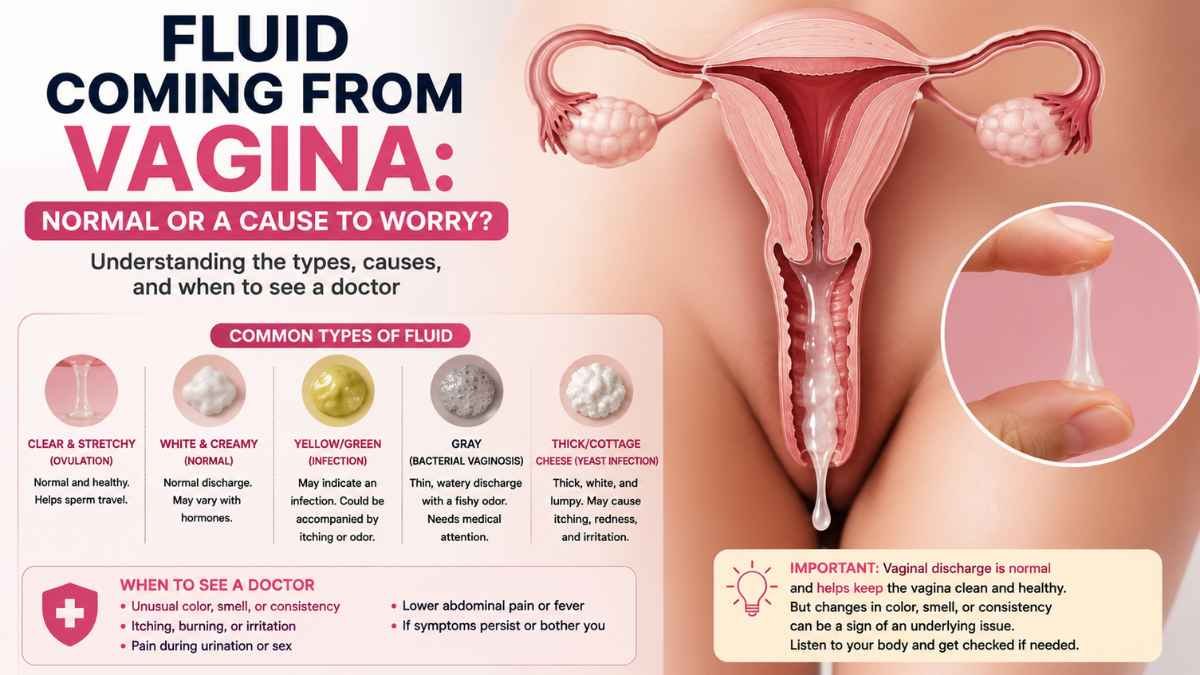
Is female ejaculation the same as vaginal lubrication?
No.
Normal vaginal lubrication is primarily associated with sexual arousal and helps reduce friction during sexual activity.
Female ejaculation refers to fluid expelled through the urethra.
These are different physiological processes, although they can occur at the same time.
This distinction is important because seeing more moisture during sex does not automatically mean that a woman has ejaculated.
Is squirting just urine?
This question has generated considerable debate.
Current research indicates that squirting fluid often has a significant bladder-derived component and can contain urine-like substances, while it may also contain secretions associated with the paraurethral glands.
Female ejaculation, in contrast, is generally described as a smaller-volume fluid associated with the paraurethral glands and containing PSA.
So saying simply:
“Squirting is just pee.”
is an oversimplification.
The fluid's composition can be more complicated than ordinary urine.
Why does the bladder matter?
During sexual arousal, the bladder can fill.
Ultrasound studies have observed bladder filling during sexual stimulation followed by emptying during squirting.
This helps explain why squirting can sometimes involve a much larger amount of fluid than female ejaculation.
It also explains why some women may feel a sensation similar to needing to urinate shortly before fluid release.
That sensation does not necessarily mean that something is medically wrong.
Is female ejaculation normal?
Yes.
Female ejaculation and squirting can be normal variations of sexual response.
A 2026 systematic review described both phenomena as physiological rather than inherently pathological.
The important point is that women should not feel embarrassed simply because their bodies respond differently during sexual activity.
At the same time, women who never experience ejaculation should not feel that they are missing something.
Both experiences can be normal.
Does every woman have the ability to ejaculate?
Not every woman experiences female ejaculation.
Studies have reported widely varying estimates of how frequently women experience it, partly because researchers have used different definitions and methods. The International Society for Sexual Medicine notes that estimates vary substantially across studies.
That variation itself tells us something important:
There is no universal female sexual-response pattern.
Can female ejaculation happen every time?
It can, but it doesn't have to.
A woman might experience ejaculation during some sexual encounters but not others.
Factors such as:
- Level of arousal
- Type of stimulation
- Sexual position
- Relaxation
- Individual anatomy
- Hormonal factors
- Bladder fullness
may influence the experience.
But there is no medically required frequency.
A woman doesn't need to ejaculate every time she has sex.
Does not ejaculating mean something is wrong?
No.
This is one of the most important messages.
A woman can have a completely healthy sex life without ever experiencing female ejaculation or squirting.
Female ejaculation is not a requirement for orgasm, sexual satisfaction, fertility or sexual health.
So comparing yourself with videos, pornography or stories from other people can create unnecessary pressure.
What about pornography and squirting?
Pornography can create unrealistic expectations about female ejaculation.
Large-volume squirting shown in adult videos may not represent what typically happens during real sexual experiences, and recent research has specifically noted that exaggerated depictions can contribute to unrealistic expectations and performance pressure.
Real-life experiences vary dramatically.
Some women may release only a small amount of fluid.
Some may experience larger-volume squirting.
Others may experience neither.
All three can fall within normal variation.
Does female ejaculation mean better sex?
No.
The presence or absence of female ejaculation does not tell you whether someone had “better” sex.
Sexual satisfaction depends on many factors, including:
- Comfort
- Arousal
- Communication
- Emotional connection
- Pleasure
- Consent
- Individual preferences
Fluid release should not be treated as a scorecard for sexual performance.
Is female ejaculation related to fertility?
There is no evidence that a woman needs to ejaculate to become pregnant.
Female ejaculation is not a requirement for conception.
Pregnancy depends on sperm reaching an egg, while female ejaculation is a separate aspect of sexual response.
So claims suggesting that female ejaculation is necessary for fertility should not be taken seriously.
Can female ejaculation be confused with urinary incontinence?
Yes.
This is one reason the distinction matters medically.
Coital incontinence refers to involuntary urine leakage during sexual activity.
That is different from a physiological sexual response such as female ejaculation or squirting.
A 2026 systematic review specifically emphasized the importance of distinguishing female ejaculation, squirting and coital incontinence because they can otherwise be confused with one another.
If someone experiences unexpected urine leakage during sex and is worried about bladder control, medical evaluation can help determine what is actually happening.
When should fluid release during sex be checked?
Female ejaculation or squirting itself is generally not something that requires treatment.
But medical advice is appropriate if fluid release is accompanied by:
- Pain
- Burning
- Blood
- Strong or foul-smelling fluid
- Persistent urinary leakage outside sexual activity
- Pelvic pain
- New urinary symptoms
- Significant distress
Those symptoms may point toward another condition rather than normal sexual fluid release.
The biggest myths about female ejaculation
Myth 1: Every woman ejaculates
False.
Some women do, some don't.
Myth 2: Female ejaculation must happen during orgasm
False.
It can occur during arousal and may not always coincide exactly with orgasm.
Myth 3: Squirting and female ejaculation are exactly the same
Not necessarily.
Medical literature increasingly distinguishes the two based on volume, composition and origin.
Myth 4: Not ejaculating means something is wrong
False.
Not experiencing female ejaculation can be completely normal.
Myth 5: Squirting means a woman has lost bladder control
Not necessarily.
Squirting and coital incontinence are different phenomena, although they can be confused.
Myth 6: More fluid means a stronger orgasm
Not proven.
Fluid volume does not provide a reliable measurement of orgasm intensity or sexual satisfaction.
The Bottom Line
So, do women ejaculate?
Yes, some women experience female ejaculation, a recognized form of sexual fluid release. Others experience squirting, which generally involves a larger volume of fluid and can have a substantial bladder-derived component.
But there is no fixed female ejaculation timing.
It may happen during sexual arousal, around orgasm, before or after orgasm—or not happen at all.
And that's completely normal.
The most important thing to remember is that female ejaculation is not a requirement for orgasm or sexual satisfaction.
So if you've never experienced it, there's no reason to assume something is wrong.
And if you do experience it, there's no reason to feel embarrassed.
Female sexual response varies widely—and there is no single “normal” way for every woman to experience pleasure.