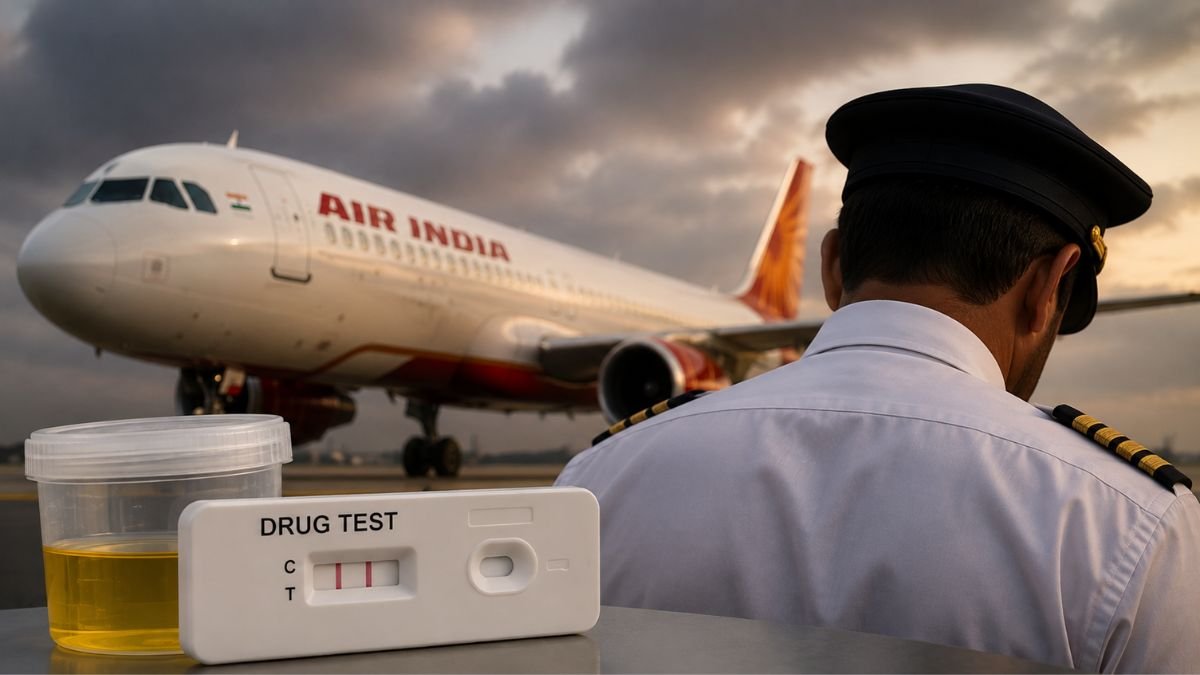
The Air India Phuket-Delhi flight incident has taken a serious turn after the pilot-in-command (PIC) reportedly failed a second, confirmatory drug test and was found to have consumed marijuana.
The pilot was in command of flight AI2379, which was badly rattled during its journey from Phuket to Delhi last Tuesday. The incident had already raised questions after the aircraft suddenly lost altitude and briefly entered a negative-G situation.
Now, a confirmatory drug test has added another major dimension to the investigation.
According to the report, the cabin crew has also filed a complaint with Air India over the pilot's alleged behaviour during the flight. The pilot could face action beyond the existing Directorate General of Civil Aviation (DGCA) rules, while the Aircraft Accident Investigation Bureau (AAIB) is examining the incident.
Pilot's Second Dope Test Reportedly Positive
The pilot had initially undergone drug testing after the incident. His first test was not negative and was sent for confirmation.
The second confirmatory test has now reportedly come positive for marijuana, according to sources cited by The Times of India.
The development has prompted increased scrutiny of the pilot's condition during the flight and the procedures used by airlines to detect psychoactive substance use among flight crew.
Under existing DGCA rules, a pilot who tests positive for a prohibited psychoactive substance is required to undergo de-addiction treatment and can return to flying after being certified drug-free.
However, the incident has also led the DGCA to examine whether the existing rules and testing procedures need to become more stringent.
Cabin Crew Reported Alarming Behaviour
The most concerning details relate to what the pilot allegedly did inside the aircraft.
Multiple sources told TOI that the pilot appeared to be under the influence of psychoactive substances during the flight.
One source claimed that the pilot was sitting on the cockpit floor at times and tried to smoke, while cabin crew members had to help him return to his seat.
The source also said that the pilot was not fully in control of himself and had difficulty walking properly after leaving the aircraft.
Air India did not comment on the cabin crew's alleged complaint.
The investigation will have to establish whether these allegations are accurate and, if so, whether the pilot's condition had any connection with the sudden loss of altitude experienced by the aircraft.
What Happened When the Aircraft Lost Altitude?
The Airbus A320 involved in the incident reportedly experienced a sudden loss of altitude during the flight.
According to the report, the aircraft briefly entered a negative-G situation. During such a moment, people and unsecured objects inside the cockpit can temporarily move upward.
The incident resulted in injuries to passengers who were not wearing seat belts.
The report says 20 passengers and four cabin crew members were injured.
The exact reason for the sudden altitude loss has not yet been established.
Investigators are considering whether the aircraft experienced a series of multiple and unusual technical problems, as reportedly mentioned by the co-pilot in his report, or whether the actions of the pilot-in-command played a role.
According to sources, when the aircraft experienced the altitude loss, the PIC was standing and leaning behind the co-pilot's seat.
Co-Pilot May Have Alerted Ground Control
The report also raises the possibility that the co-pilot informed Air India's ground control about the pilot's behaviour.
This may have contributed to the unusual decision to subject the cockpit crew to a drug test rather than relying only on breathalyser testing.
The government has said that the AAIB is collecting and examining technical, operational, medical and human-factor evidence as part of its investigation.
The investigation is therefore not limited to the drug-test result. Investigators are examining the aircraft's technical condition, what happened inside the cockpit, the crew's actions and the circumstances surrounding the sudden loss of altitude.
Government Wants Investigation Into What Went Wrong
The incident has now reached the Ministry of Civil Aviation.
The aviation ministry summoned Air India's outgoing CEO Campbell Wilson to discuss the incident and understand how the airline was handling the matter.
The government has also asked the DGCA to review its existing rules concerning the testing of aviation personnel for psychoactive substances.
The AAIB has separately started examining the incident.
In its statement, the aviation ministry said that certain records, statements, medical information and other material collected during the investigation are protected and confidential under the applicable investigation framework.
The AAIB also urged people not to draw conclusions before the investigation is complete. It said the agency would examine all relevant facts and evidence before issuing its preliminary findings.
Pilots Seek Clarity Over Medication and Drug Tests
The incident has also triggered a wider discussion among senior pilots about how aviation drug-testing rules should distinguish between different substances.
India's senior-most pilots have reportedly sought a distinction between pilots who test positive after taking medication for sleep or anxiety and those who have actually consumed prohibited psychoactive substances.
Airlines maintain lists of medicines that pilots need to avoid for a certain period before flying because some medications can cause drowsiness or affect alertness.
This distinction could become part of the regulatory review following the Phuket-Delhi incident.
What Happens to the Pilot Now?
The pilot's confirmatory test result means the matter is now being examined from both aviation safety and regulatory perspectives.
The existing DGCA framework requires a pilot who tests positive for a prohibited psychoactive substance to undergo de-addiction treatment and receive certification that they are drug-free before returning to flying.
However, the full consequences for the pilot will depend on the investigation and the applicable rules.
The authorities also need to determine whether the reported drug use had any connection with the aircraft's sudden loss of altitude.
At this stage, a positive test alone does not establish that the pilot caused the flight incident. The AAIB has specifically said that it is examining all relevant technical, operational, medical and human-factor evidence before reaching conclusions.
Air India Flight AI2379 Investigation Continues
The Phuket-Delhi flight incident has now raised several separate questions.
There is the reported positive confirmatory marijuana test, the cabin crew's complaint about the pilot's alleged behaviour, the aircraft's sudden altitude loss, the negative-G episode and the possibility of technical problems.
There are also questions about the effectiveness of existing pilot drug-testing rules and how airlines identify whether a crew member is fit to operate an aircraft.
The AAIB's investigation is expected to establish how these different factors fit together.
For now, the aviation ministry has said that investigators are systematically examining the technical, operational, medical and human aspects of the incident.
The final investigation will therefore be important in determining whether the sudden loss of altitude was caused by technical problems, pilot actions, or a combination of factors.