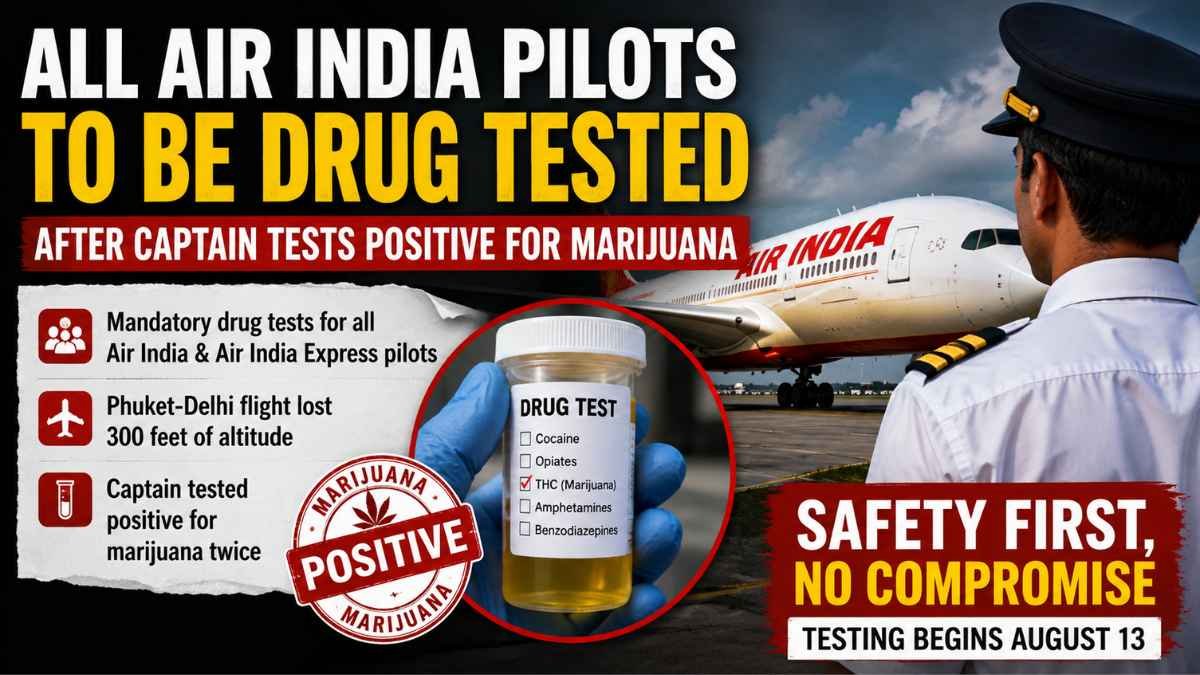
Air India has ordered mandatory drug testing for all its pilots after the captain of a Phuket-Delhi flight tested positive for marijuana twice following a sudden loss of altitude during the journey.
The fresh screening applies to pilots of both Air India and Air India Express and begins from August 13. The airline said the move goes beyond existing regulatory requirements and is intended to strengthen safety and reassure passengers.
All Air India Pilots to Undergo Fresh Screening
According to a formal letter sent to employees, Air India will conduct a full screening of its Group pilots for substances or medications that are not permitted under prevailing regulations.
The testing will take place alongside training at the Gurugram Academy and after flights at Air India's briefing centres and offices.
The airline said it already complies with the requirements prescribed by India's aviation regulator, the DGCA, but decided to introduce broader screening following the recent incident.
Air India said the initiative is aimed at maintaining high standards of safety and professionalism while restoring confidence among passengers and other stakeholders.
Phuket-Delhi Flight Had Lost 300 Feet of Altitude
The new testing order comes after the captain of Air India flight AI-2379 tested positive for marijuana twice.
The flight was travelling from Phuket to Delhi on August 4 when it suddenly lost around 300 feet of altitude over Odisha.
The aircraft was carrying 137 passengers and eight crew members. At least 20 passengers and four crew members were injured during the incident.
The pilot involved was identified in the report as Sudeep Vashistha.
An incident report accessed by NDTV indicates that Vashistha was not in his seat when the aircraft lost altitude and that the co-pilot was in command at that moment.
Pilot Reportedly Unsteady After Landing
According to sources cited by NDTV, after the incident the pilot went into the cabin to check on injured passengers.
He reportedly told passengers not to film him or the aircraft.
After the aircraft landed in Delhi, sources said Vashistha appeared unsteady on his feet and had to be helped to sit down.
He was also physically assisted by an investigating officer while submitting his urine sample for testing.
The pilot subsequently tested positive for marijuana in two drug tests, according to the report.
Pilot Had Also Mentioned Sleep Problems
The incident has another significant element.
According to Air India's internal flight safety report accessed by NDTV, Vashistha said he had been taking medication for sleep difficulties.
He said he had experienced difficulty sleeping during the layover and had previously been prescribed medication by his family doctor because of sleep problems related to personal circumstances.
He also said he had tried to rest during the layover but found it difficult to sleep.
In his statement, the pilot said he believed walking or light activity could help with his sleep quality.
He further said his roster duties were legally within prescribed rest limits but that the scheduling had compressed his available daytime rest, which he said was sometimes below what was needed for adequate recovery.
Air India Express Asks Pilots to Self-Declare Substance Use
Air India Express has separately urged its pilots to voluntarily disclose any use, misuse, dependence on or abuse of psychoactive substances that could affect their fitness for duty.
The airline said such self-declarations would be treated confidentially, with information shared only with officials who need to know.
The stated purpose is to identify situations that could affect an employee's ability to safely perform their responsibilities.
What Happens Next?
The mandatory testing of Air India and Air India Express pilots is now being introduced following the Phuket-Delhi incident.
The AI-2379 incident itself remains significant because it involved a sudden 300-foot altitude loss, injuries to passengers and crew, and a captain who subsequently tested positive for marijuana twice.
The airline's new screening programme will cover pilots during training as well as through post-flight testing at designated centres.
Air India said the move is intended to go beyond existing requirements and reinforce its focus on flight safety and professionalism.